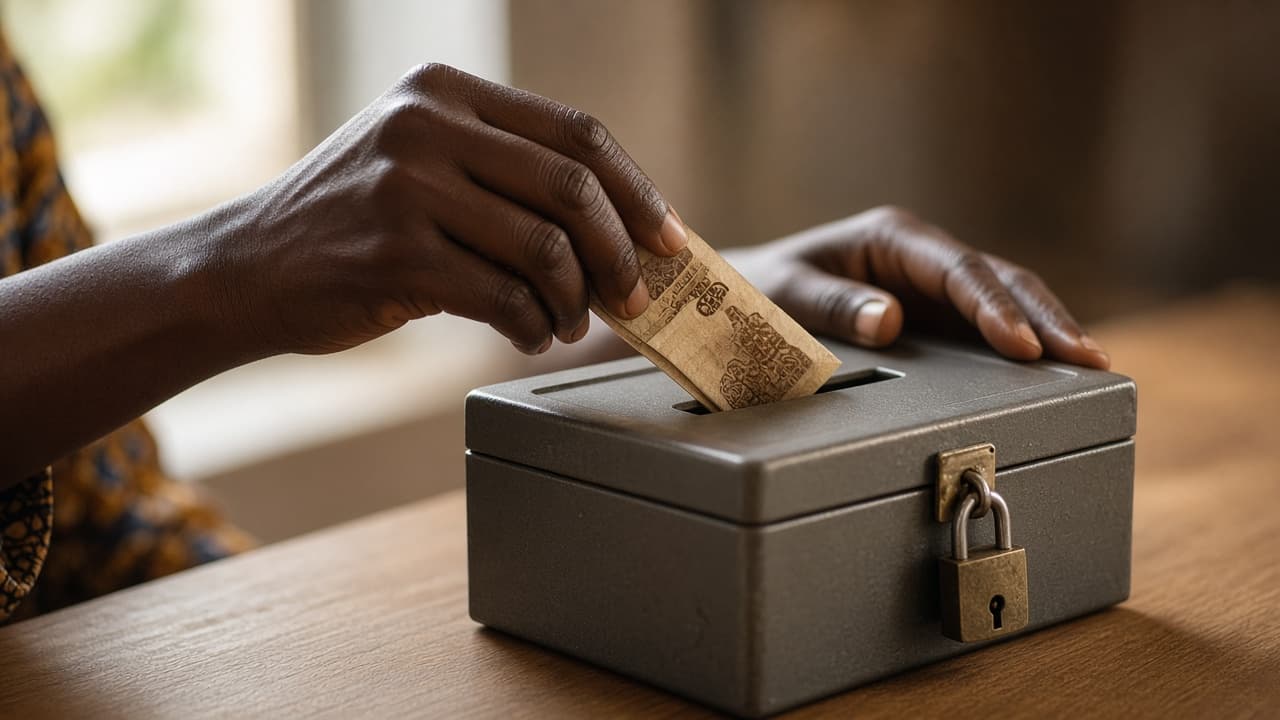
An emergency fund is money set aside for true surprises — medical bills, urgent travel, a broken phone needed for work, or a slow trading week. Without it, emergencies often become high-interest borrowing.
How much is enough?
A practical first target is one month of essential expenses (rent or housing contribution, food, transport, utilities, school basics). Later, stretch toward two or three months if your income is irregular.
Where to keep it
Keep emergency money liquid but not mixed with spending cash. A dedicated savings balance at a trusted institution is usually safer than cash at home and harder to spend impulsively.
How to build it without stress
- Open (or label) a separate savings pocket called “Emergency”.
- Deposit a fixed amount every payday — start small if needed.
- Add windfalls: overtime, gifts, tax refunds, profit spikes.
- Only withdraw for real emergencies — not sales or celebrations.